
The History of Asbestos: From Ancient Wonder to Modern Menace
Asbestos is a word that evokes fear and concern today, but for most of human history, it was hailed as a miraculous material. Known for its fire-resistant properties and remarkable durability, asbestos was used across the world for thousands of years before its deadly health effects became widely recognized—and then blatantly ignored and covered up by corporate greed. This blog post delves into the complex history of asbestos, tracing its journey from ancient civilizations to its industrial boom in the 20th century, and finally, to the revelations that have led to its downfall.
The Ancient Roots of Asbestos
Asbestos has been known to humankind for thousands of years, with its earliest uses dating back to ancient civilizations. The name “asbestos” itself comes from the ancient Greek word “ἄσβεστος,” meaning “inextinguishable” or “unquenchable,” a reference to its fireproof qualities.
- Ancient Egypt: The ancient Egyptians were among the first to make use of asbestos. They used asbestos fibers in the embalming process to protect their dead from the ravages of time. Additionally, asbestos was woven into the cloths that were wrapped around mummies to prevent decay, underscoring its perceived protective qualities.
- Ancient Greece: The Greeks used asbestos in their textiles, particularly in the clothing worn by their priests. These garments, made from asbestos, were said to have been cleansed of impurities by simply throwing them into a fire. The Greeks also utilized asbestos in their lamp wicks and other items that needed to withstand heat.
- Roman Empire: The Romans took asbestos use to another level, weaving it into fabrics that were used in various applications, including tablecloths and napkins. Legend has it that the Roman naturalist Pliny the Elder noted the mysterious material’s resistance to fire, but he also observed that slaves who worked with asbestos suffered from “sickness of the lungs.” This early recognition of asbestos’s potential health hazards was largely ignored, as the material’s usefulness overshadowed these warnings.
The Industrial Revolution and the Asbestos Boom
The Industrial Revolution in the 18th and 19th centuries marked a significant turning point in the use of asbestos. As industries expanded and technology advanced, the demand for materials that could withstand high temperatures and corrosion grew. Asbestos, with its unique properties, became an essential component in a wide range of industrial products.
The development of steam engines and the growth of the railroad industry created a massive demand for asbestos. Asbestos was used extensively as an insulator for steam engines, turbines, boilers, and pipes, preventing heat loss and protecting workers from burns. Its fireproof nature also made it a preferred material for insulating factories and shipyards.
Asbestos found its way into nearly every facet of construction. It was mixed with cement to produce durable roofing, used as insulation in walls and ceilings, and incorporated into floor tiles, paints, and adhesives. By the early 20th century, asbestos was a standard material in building construction, touted for its ability to improve safety and longevity.
Asbestos played a critical role in military applications, particularly during World War II. It was used in ships, tanks, aircraft, and barracks, primarily as an insulator and fireproofing agent. The U.S. Navy, for example, relied heavily on asbestos to insulate its ships, exposing thousands of sailors and shipyard workers to the material.
The Deadly Truth: Asbestos and Health Hazards
While the industrial use of asbestos surged, so too did the number of people suffering from mysterious respiratory illnesses. However, it wasn’t until the early 20th century that the full extent of asbestos’s dangers began to be understood.
In the early 1900s, doctors in Britain and the United States began to notice a troubling trend among workers in asbestos factories. Many were developing severe respiratory issues, including a condition that would later be named “asbestosis.” This disease, characterized by scarring of the lung tissue, was directly linked to the inhalation of asbestos fibers.
The first officially recorded case of asbestosis was made in 1924, when Nellie Kershaw, a British asbestos worker, died from the disease. Her case brought attention to the dire health risks faced by those who worked with asbestos, but despite this, asbestos production and use continued to grow.
The link between asbestos and cancer became undeniable in the mid-20th century. Studies conducted in the 1940s and 1950s revealed a strong correlation between asbestos exposure and lung cancer, as well as mesothelioma, a rare and aggressive cancer that affects the lining of the lungs, abdomen, or heart. Unlike other forms of cancer, mesothelioma is almost exclusively caused by asbestos exposure, making it a devastating legacy of asbestos use.
The Global Asbestos Industry: A Giant with Feet of Clay
Despite the growing evidence of its dangers, the asbestos industry continued to thrive well into the 20th century. The material was so widely used that it became nearly impossible to avoid, particularly in industrialized nations.
The 1970s marked the peak of global asbestos production, with millions of tons being mined and processed each year. Canada, Russia, and South Africa were among the leading producers of asbestos, supplying the material to countries around the world.
By this time, asbestos was found in over 3,000 different products, ranging from household items like ironing boards and hair dryers to industrial products like brake linings, gaskets, and insulation. It was also used in schools, hospitals, and public buildings, ensuring that virtually everyone was exposed to asbestos in some form.
The asbestos industry fought hard to downplay the dangers of their product. Companies hid evidence of asbestos-related diseases from the public and even their own workers. Despite mounting legal cases and damning scientific studies, the industry maintained that asbestos was safe when handled properly, a claim that would later be proven catastrophically false.
The Fall of Asbestos: Regulations and Bans
As the 20th century progressed, the tide began to turn against asbestos. The mounting evidence of its health risks could no longer be ignored, leading to increased regulation and eventually, outright bans in many countries.
The first significant regulatory actions against asbestos began in the 1970s. In the United States, the Environmental Protection Agency (EPA) and the Occupational Safety and Health Administration (OSHA) introduced regulations to limit asbestos exposure in the workplace and reduce its use in consumer products. These regulations were strengthened over the following decades as more information about the dangers of asbestos became available.
Countries around the world began to ban or severely restrict the use of asbestos. Sweden became the first country to ban asbestos in 1982, followed by a wave of bans across Europe, Australia, and Japan. Today, more than 60 countries have banned asbestos entirely, though the material is still in use in some parts of the world, particularly in developing nations. And while progress was made when the EPA issued its Final Rule banning chrysotile asbestos earlier this year, there are still long phase-out timelines for eliminating current uses of asbestos.
Despite these bans, asbestos remains a significant problem due to its extensive use in the past. Millions of buildings, including homes, schools, and offices, still contain asbestos materials. The process of removing asbestos is dangerous and costly, meaning that it often remains in place, posing a threat to anyone who might disturb it.
Asbestos Today: A Continuing Crisis
Even as the world turns away from asbestos, the material continues to pose a serious threat. The latency period between exposure and the onset of diseases like mesothelioma means that cases are still emerging, decades after the initial exposure.
According to the World Health Organization (WHO), more than 107,000 people die each year from asbestos-related diseases, including asbestosis, lung cancer, and mesothelioma. These numbers are expected to rise as more people are diagnosed with diseases caused by past asbestos exposure.
Alarmingly, asbestos is still mined and used in some countries, including Russia, China, and India. The continued use of asbestos in these regions ensures that new generations will be exposed to its dangers, perpetuating the cycle of illness and death.
Interesting and Unique Facts about Asbestos
- Asbestos in Mythology: Asbestos was once believed to be the hair of an ancient creature called a salamander. Medieval Europeans thought that salamanders could live in fire, and they associated asbestos with this mythical creature due to its fire-resistant properties.
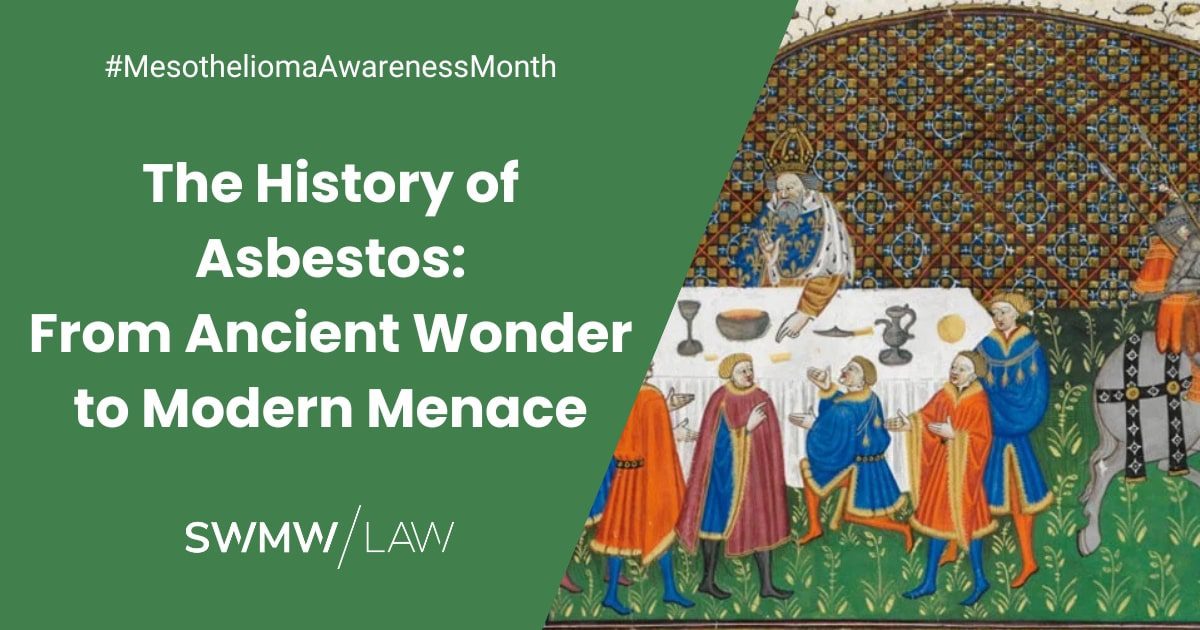
- Royal Use of Asbestos: King Charlemagne, the first Holy Roman Emperor, is said to have had a tablecloth made of asbestos. According to legend, he would throw the cloth into the fire after a feast to clean it, much to the amazement of his guests.
- Asbestos in Modern Products: Even though asbestos use has been heavily restricted, it can still be found in certain products today, particularly in countries where it is not banned. Items like automotive brake pads, roofing materials, and even some crayons have been found to contain asbestos fibers.
- Asbestos and Space: Asbestos has even been used in space. Due to its heat-resistant properties, it was used in the construction of space shuttles and other spacecraft, though modern advancements have led to safer alternatives being developed.
Conclusion: The Enduring Legacy of Asbestos
The history of asbestos is a cautionary tale of how a material once celebrated for its usefulness can become a global health crisis. Asbestos’s rise and fall underscores the importance of understanding and respecting the potential hazards of the materials we use.
Today, while much of the world has turned its back on asbestos, the legacy of its widespread use continues to affect millions of people. As we move forward, it is crucial that we remain vigilant in our efforts to address the ongoing dangers of asbestos, support those who have been affected by its deadly legacy and ensure that the mistakes of the past are not repeated.