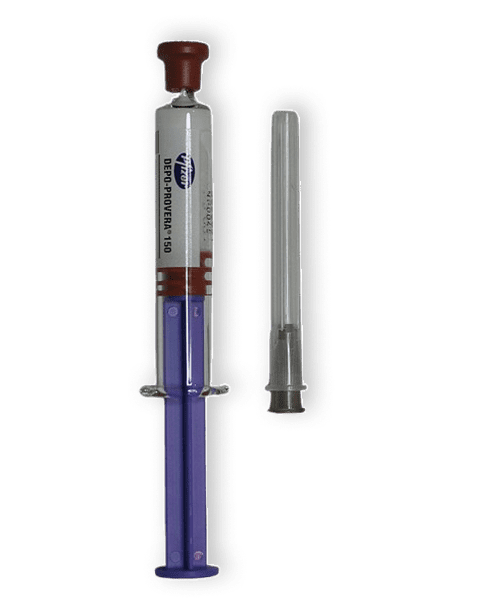
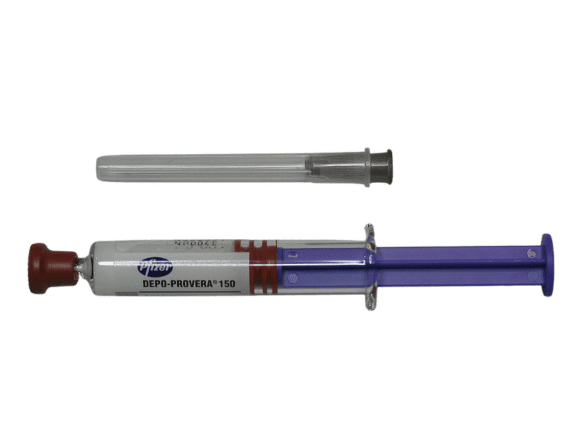
Legal Help for Women Diagnosed with Meningioma After Depo-Provera
If you or a loved one developed a brain tumor after Depo-Provera injections, you are not alone. Over 2,000 women have already filed lawsuits against Pfizer, claiming the company failed to warn about the link between Depo-Provera and meningiomas, a serious type of brain tumor. These lawsuits are now part of a rapidly growing mass tort known as MDL 3140, one of the fastest-growing MDLs in the federal court system.
At SWMW Law, we are currently reviewing Depo-Provera lawsuit claims nationwide. Our attorneys offer free consultations and can help determine whether you qualify for compensation. There are no fees unless we win your case.
Did you or someone you know develop complications as a result of Depo-Provera injections? Contact us anytime day or night!
At SWMW Law, we’re more than legal advocates — we’re a source of support during the most difficult times in our clients’ lives. We’re proud to be trusted by families across the country, and even prouder to share what they have to say about working with us.
“SWMW did an amazing job! They started the process with my father but during the process my father passed. They were so helpful when it came to us, his children, taking over in place of my dad. They answered every call and were extremely patient and supportive of us. They really did a great job with keeping us informed and educated. They fought for us. I would recommend them to anyone that hears the diagnosis of Mesothelioma. They will fight for you 100% of the way. Thank you SWMW Team for your support and patience! We truly appreciate all of you! – The Anderson’s”
I would personally like to thank you and your staff for how you’ve have helped me and my family with a bit of our loss. It doesn’t bring my dear wife back, but it helps relieve some of our daily stress as we push on. Thank you.
Everyone at SWMW Law have went above & beyond. They’ve been so compassionate & so very helpful. I really didn’t think I would be getting anything for my late husband. I feel like they have found every way possible to get something in the memory of my late husband. He didn’t deserve to pass the way he did, & SWMW Law are making sure his death wasn’t in vain. Ty you to Lyndsy & everyone who has put long hours into helping me. My deepest appreciation to you all.
I am very impressed with the quality of work that SWMW Law has done for me. All of my questions were answered quickly and everyone I had contact with were very kind and professional. I would highly recommend this law firm. Thanks to everyone at the firm for all that you have done for me.
I cannot say enough wonderful things about the SWMW Law Firm. This firm has a team of amazing, smart and professional attorneys and staff. They really care about their clients and go above and beyond to obtain justice. If I could give them more than 5 stars I would!! Thank you all for your incredible work that you do!
Why Are Women Filing Depo-Provera Brain Tumor Lawsuits?
Two major peer-reviewed studies have established a connection between Depo-Provera and meningioma brain tumors:
A landmark 2024 BMJ study found that women who use Depo-Provera face a 5.55-fold increased risk of intracranial meningioma. The study analyzed over 18,000 meningioma surgery cases using French National Health Data from 2009-2018.
A 2025 JAMA Neurology study from Cleveland Clinic researchers confirmed these findings in the United States, showing a 2.43-fold increased risk among Depo-Provera users. This study examined over 10.4 million patients using the TriNetX database from 2004-2024. Notably, the researchers found that risk was concentrated in women with more than 4 years of Depo-Provera use or those who started at age 31 or older.
Meningiomas are tumors that grow in the lining of the brain and can cause serious neurological problems. While many meningiomas are classified as non-malignant, they often require complex brain surgery, radiation, or other invasive treatments.
Key Findings from the Scientific Research:
5.55x higher risk of brain tumors in long-term Depo-Provera users (BMJ 2024)
2.43x increased risk confirmed in U.S. population (JAMA Neurology 2025)
Risk increases significantly after more than 4 years of use
Higher risk for women who started Depo-Provera at age 31 or older
Tumors often located near the skull base, increasing surgical complexity
On December 12, 2025, the FDA approved a new meningioma warning for Depo-Provera CI. The updated prescribing information now states:
“Meningioma: Discontinue Depo-Provera CI if meningioma is diagnosed. Monitor patients for signs and symptoms of meningioma.”
This warning came more than 33 years after Depo-Provera’s initial FDA approval in 1992 and nearly two years after the key BMJ study was published in March 2024.
The timing of this warning is a central issue in the litigation. Plaintiffs allege that Pfizer knew or should have known about the meningioma risk much earlier but delayed seeking label changes. Other countries, including Canada, the United Kingdom, and the European Union, had added meningioma warnings to Depo-Provera packaging before the U.S.
The new FDA warning may also affect the statute of limitations for some plaintiffs, as it could reset when the “discovery clock” began for women who were unaware of the connection between Depo-Provera and their brain tumor.
What Is MDL 3140? (Depo-Provera Multidistrict Litigation)
On February 7, 2025, the Judicial Panel on Multidistrict Litigation (JPML) consolidated federal Depo-Provera brain tumor cases into MDL 3140 in the Northern District of Florida. Judge M. Casey Rodgers is presiding over these cases.
Judge Rodgers brings significant experience managing complex pharmaceutical and product liability cases. She previously presided over the 3M Combat Arms Earplug MDL, one of the largest mass tort litigations in U.S. history with over 300,000 claims.
Depo-Provera Lawsuit Timeline:
October 2024
First meningioma lawsuit filed in California
February 2025
MDL 3140 created by JPML
July 2025
Over 435 cases pending in MDL 3140
September 29, 2025
JAMA Neurology study confirms U.S. risk
January 2026
Over 1,750 cases pending in MDL 3140
February 2026
Cases surpass 2000 pending in MDL 3140
2026
Monthly case management conferences scheduled through September
This MDL has grown over 2,590% since its creation, making it one of the fastest-growing in the federal court system. Case counts have increased from 78 cases in March 2025 to over 2098 cases in February 2026.
Although some people search for a Depo-Provera class action lawsuit, these claims are handled through multidistrict litigation. Each plaintiff files an individual lawsuit, but the cases are coordinated for pretrial efficiency.
MDL 3140 Case Growth: 2025-2026
Month
Pending Cases
Total Filed
Monthly Growth
Mar 2025
78
78
MDL Created
Apr 2025
130
131
+52 (+66.7%)
May 2025
289
291
+159 (+122.3%)
Jun 2025
348
350
+59 (+20.4%)
Jul 2025
435
440
+87 (+25.0%)
Aug 2025
550
557
+115 (+26.4%)
Sep 2025
806
820
+256 (+46.5%)
Oct 2025
1,222
1,241
+416 (+51.6%)
Nov 2025
1,225
1,244
+3 (+0.2%)
Dec 2025
1,470
1,492
+245 (+20.0%)
Jan 2026
1,752
1,775
+282 (+19.2%)
Feb 2026
2,098
2,123
+346 (+19.7%)
Total Growth Since MDL Creation:
+2,020 cases (+2,590%)
Source: JPML MDL Statistics Reports, March 2025 – February 2026
MDL-3140: Depo-Provera Case Growth
Pending Actions in Federal MDL (February 2025 – February 2026)
Our team is comprised of dozens of highly talented and experienced attorneys ready to fight for your best outcome.
Thousands of Clients Represented
Over the course of our firm’s experience, we have helped thousands of victims and their families recover life-changing verdicts and settlements.
Nationwide Representation
We come to you wherever you are in the United States.
Resources + Personal Attention
A senior partner of our firm will be involved in your case, utilizing a team approach with massive resources uniquely applied to your case.
Who Qualifies for a Depo-Provera Lawsuit?
You may qualify for a Depo-Provera brain tumor lawsuit if:
You received Depo-Provera injections for at least 12 months
You were diagnosed with an intracranial meningioma (confirmed by MRI or pathology)
You required surgery, radiation, or ongoing neurological care
Even if you stopped using Depo-Provera years ago, you may still have a case. Most states apply the discovery rule, which means the statute of limitations starts when you discover the connection between Depo-Provera and your tumor.
Statute of Limitations: Time limits vary by state, typically 2-4 years from diagnosis or discovery of the connection to Depo-Provera. It is important to speak with an attorney promptly to protect your rights.
According to the National Cancer Institute (NCI), a meningioma is a primary central nervous system tumor arising from the meninges, the protective membranes covering the brain and spinal cord. It is the most common type of primary brain tumor, representing approximately 41.7% of all brain tumors and 56.8% of non-malignant tumors.
Meningiomas are classified by WHO grade:
Grade 1 (Low-Grade): The most common type. These slow-growing tumors have the lowest recurrence risk and are often treated with surgery alone.
Grade 2 (Atypical): Mid-grade tumors with a higher likelihood of recurrence. Subtypes include chordoid and clear cell variants. These often require more aggressive treatment.
Grade 3 (Malignant): Fast-growing, cancerous tumors. Subtypes include papillary and rhabdoid variants. These require the most aggressive treatment approaches, including surgery, radiation, and sometimes chemotherapy.
Even non-malignant meningiomas often require brain surgery, which carries significant risks regardless of whether the tumor itself is cancerous. The location of the tumor near critical brain structures can make surgery particularly complex.
The first step is to speak with an experienced Depo-Provera lawyer.
At SWMW Law, we make the process simple and confidential. Our team will help you gather the necessary medical records, including:
Injection history (dates, locations, and dosage)
MRI or CT scans confirming meningioma diagnosis
Surgical records if a tumor was removed
Neurological evaluations documenting symptoms
We handle all legal work on your behalf, so you can focus on your health and recovery.
Defendants in This Litigation
Brand Manufacturer: Pfizer Inc. holds the NDA (New Drug Application) for Depo-Provera CI (NDA 020246) and has manufactured the brand-name injectable contraceptive since 1992.
Generic Manufacturers: Viatris Inc. is a named defendant in the litigation. Other generic manufacturers of medroxyprogesterone acetate include Amneal, Amphastar, Eugia Pharma, and Xiromed.
At SWMW Law, we have a proven track record of success in mass tort cases involving dangerous drugs and defective medical devices. We have recovered over $750 million for injured clients and work with leading neuro-oncology experts to build strong cases for our clients.
No. Depo-Provera cases are part of a multidistrict litigation (MDL), not a class action. Each case is handled individually.
Do I need my old medical records?
Yes, but our team will help you obtain them. We assist clients in gathering injection records, diagnostic imaging, and medical histories.
What is the statute of limitations for Depo-Provera claims?
Most states allow 2 to 3 years from the time you discover the link between Depo-Provera and your tumor. Some states offer additional time for fraudulent concealment claims.
Can I file if I stopped Depo-Provera years ago?
Yes. Many claims involve women who stopped using Depo-Provera years before their diagnosis
How long does it take for meningioma to develop from Depo-Provera?
According to the 2025 JAMA Neurology study, increased risk was primarily seen in patients with more than 4 years of exposure. Meningiomas are typically slow-growing tumors that can take years to develop and become symptomatic. Some women are diagnosed years after stopping Depo-Provera use.
Are all meningiomas from Depo-Provera cancerous?
No. Most meningiomas (Grade 1) are non-malignant, though they can still cause serious symptoms depending on their location and size. Only Grade 3 meningiomas are considered malignant. However, even non-malignant meningiomas often require brain surgery, which carries significant risks regardless of whether the tumor is cancerous.
Are all meningiomas from Depo-Provera cancerous?
No. Most meningiomas (Grade 1) are non-malignant, though they can still cause serious symptoms depending on their location and size. Only Grade 3 meningiomas are considered malignant. However, even non-malignant meningiomas often require brain surgery, which carries significant risks regardless of whether the tumor is cancerous.
Why did the FDA wait until 2025 to add the meningioma warning?
Most Depo-Provera attorneys, including those at SWMW Law, work on a contingency fee basis. This means we only get paid if you win or settle your case. The fee is typically a percentage of the recovery. Initial consultations are free, allowing you to understand your options without any upfront cost.
Does it cost anything to file a lawsuit?
This is a central question in the litigation. Plaintiffs allege that Pfizer knew or should have known about the meningioma risk earlier but delayed seeking label changes. The warning was added 33 years after initial approval and nearly 2 years after the key BMJ study was published in March 2024.
Can I still take Depo-Provera?
Depo-Provera remains FDA-approved and available. The decision to use it should be made with your healthcare provider after discussing the risks and benefits. The new FDA warning advises discontinuation if meningioma is diagnosed and monitoring for signs and symptoms of meningioma.
If you or someone you love developed a brain tumor after Depo-Provera injections, contact SWMW Law for a free, confidential consultation. Our attorneys are available 24/7 to answer your questions.
If you or someone you love developed a brain tumor after Depo-Provera injections, contact SWMW Law for a free, confidential consultation. Our attorneys are available 24/7 to answer your questions. You don’t have to face this alone. We’re here to help you understand your legal options and fight for the compensation you deserve. Because people matter.
Whether you have questions or you’re ready to get started, our legal team is ready to help. Complete our form below or call us at 844-857-SWMW.